
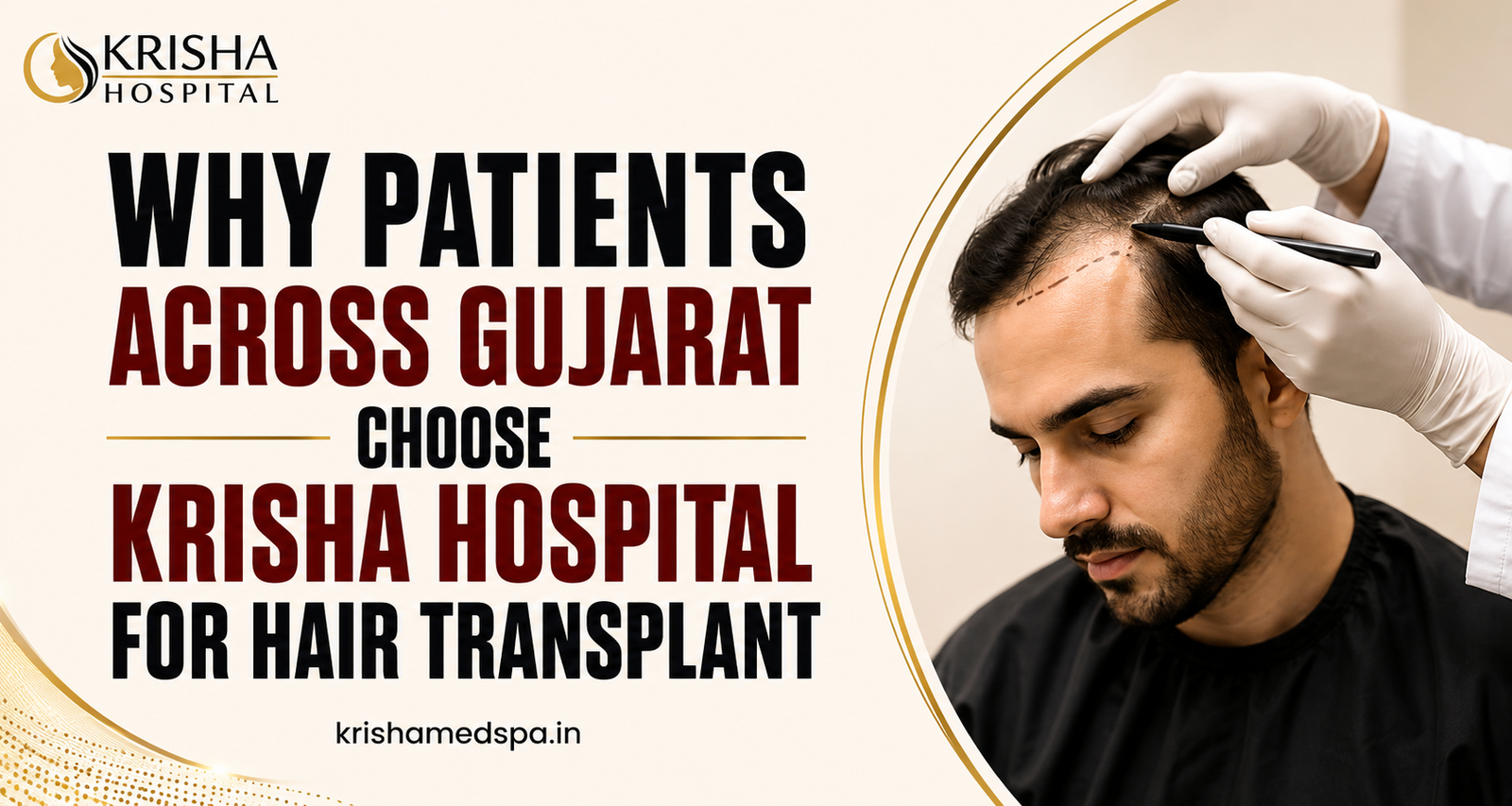
Patients across Gujarat have more choices than ever when considering hair restoration. But the right clinic is not necessarily the one offering the lowest price or the largest graft count. Diagnosis, donor assessment, technique selection, surgeon expertise, and aftercare can have a much greater influence on the overall treatment experience. That is why selecting a hair transplant hospital Gujarat patients can trust requires careful consideration.
A good hair restoration plan at a hair restoration hospital that Gujarat patients can evaluate confidently begins with diagnosis rather than a sales pitch. Hair loss can vary from person to person, so the most suitable treatment depends on its specific cause and pattern. Some people may benefit from follicular unit extraction (FUE), while others may be considered for follicular unit transplantation (FUT). Patients with early thinning may also explore non-surgical options such as GFC or PRP.
This guide explains the practical reasons patients may consider a specialist centre in Vadodara for hair restoration and what they should evaluate before making a decision.
What makes a hair transplant clinic worth considering?
The quality of a hair restoration experience depends on more than the procedure itself. A reliable centre should assess the pattern of hair loss, examine the donor area, discuss medical history, and explain realistic outcomes.
Patients looking for hair transplant Gujarat services should ask who will perform the assessment, how grafts are handled, what technique is recommended, and what aftercare is included.
A thoughtful consultation can also identify situations where transplantation may not be the first choice. Active scalp problems, rapidly progressing hair loss, limited donor supply, or certain medical factors may require further evaluation before surgery.
1. Personalised assessment comes first
No two cases of hair loss are identical. Age, family history, hair density, donor quality, scalp condition, and the expected progression of baldness all influence treatment planning.
The goal is not simply to place as many grafts as possible. A responsible plan considers how the hairline should look now and how it may age later. This approach can help preserve donor hair for future needs.
The consultation should also explain whether the patient is a suitable candidate. In some cases, medical management or a non-surgical treatment may be more appropriate than immediate transplantation.
2. Access to multiple hair restoration options
One reason patients may prefer a full-service centre is the ability to compare treatments instead of being directed toward one procedure.
FUE removes individual follicular units from the donor area before placing them into recipient sites. It avoids the linear donor-strip incision associated with FUT and can be useful when a minimally invasive approach is appropriate.
FUT involves removing a strip of tissue from the donor area. The strip is dissected into follicular units, which are then implanted into areas affected by hair loss. It can be considered when a larger number of grafts is required, and the patient’s donor characteristics make the technique suitable.
Neither technique is automatically best for every person. The choice should depend on donor density, the degree and pattern of hair loss, hairstyle preferences, previous procedures, and the clinician’s assessment.
3. Non-surgical options for earlier hair thinning
Not every patient needs a transplant. This is especially important for people who still have functioning follicles but are experiencing thinning.
Growth Factor Concentrate, commonly called GFC, uses growth factors prepared from a patient’s blood and injected into selected scalp areas. The aim is to support follicular activity and improve the appearance of thinning hair. Treatment sessions are generally shorter than surgical transplantation.
Generally, a typical GFC price is ₹10,000 to ₹25,000 per session and around three to four sessions at intervals of four to six weeks. Actual pricing and treatment schedules can vary after assessment.
PRP uses platelet-rich plasma prepared from the patient’s own blood. After collection and centrifugation, the platelet-rich component is injected into areas of thinning. It is commonly considered for early-stage hair loss and may also be used as part of a broader hair restoration plan.
The supplied treatment information indicates that PRP may typically range from ₹4,000 to ₹15,000 per session, although actual costs vary by clinic, treatment protocol, and the number of sessions required. These figures should be treated as indicative rather than guaranteed quotes.
4. Focus on natural-looking hairlines
A successful transplant is not only about graft survival. Placement, angle, direction, spacing, and distribution influence how the final result looks.
The front hairline deserves particular attention because it is visible and frames the face. A mature, appropriately designed hairline may look more natural than an excessively low or sharply defined one.
Follicular units naturally contain different numbers of hairs. Skilled placement can use finer grafts near the front and denser groupings farther back, where appropriate. The design should also account for future hair loss.
Consequently, patients should be cautious about promises of an identical result or guaranteed density. Hair restoration has biological limits, and outcomes vary between individuals.
5. Modern FUE can reduce surgical burden
FUE is often selected by patients who want a minimally invasive transplant. Individual grafts are extracted from the donor region and prepared for implantation. Local anaesthesia is generally used to keep the procedure comfortable.
One practical advantage is that FUE does not require removal of a strip of scalp. This means there is no linear strip scar, although tiny extraction marks can still occur.
Patients should follow the prescribed washing, medication, sleeping, and activity instructions rather than relying on generic online advice.
6. FUT remains relevant for selected patients
FUT should not be dismissed simply because FUE is widely discussed. The strip technique has a different surgical approach and may be useful for selected patients.
During FUT, a strip is removed from the donor zone and divided into individual follicular units under magnification. These grafts are then placed into recipient areas according to the planned design.
The method can provide a substantial number of grafts in a session. However, it leaves a linear scar, so hairstyle choices and individual healing should be discussed beforehand.
A hair transplant hospital Gujarat should compare the trade-offs rather than presenting one method as universally superior.
7. Clear expectations about recovery and results
Hair transplantation does not create instant final density. Transplanted hairs generally pass through stages before mature growth becomes visible. Patience is therefore an important part of the process.
Patients should receive instructions about scalp care, physical activity, sun exposure, sleeping position, and follow-up appointments. They should also understand when temporary shedding may occur and when progress should be reviewed.
Which Hair Restoration Procedure Fits Your Needs?
Choosing the right treatment depends on your hair-loss pattern, donor supply, goals, and medical assessment. A hair transplant hospital Gujarat patients trust can help compare these options.
| Procedure | How It Works | Best Suited For | Key Advantage | Downtime |
| FUE | Individual hair follicles are extracted from the donor area and implanted into thinning or bald areas. | People seeking long-lasting hair restoration with a minimally invasive approach. | No linear strip scar and natural-looking results. | Usually minimal |
| FUT | A strip of donor scalp is removed and divided into individual follicular grafts for transplantation. | Patients who may require a larger number of grafts. | Can provide a high graft yield in a session. | More recovery than FUE |
| GFC | Growth factors prepared from the patient’s blood are injected into thinning scalp areas. | Early to moderate hair thinning with viable follicles. | Non-surgical and quick sessions. | Minimal |
| PRP | Platelet-rich plasma is prepared from the patient’s blood and injected into areas of hair thinning. | Early-stage hair loss and mild to moderate thinning. | Uses the patient’s own growth factors to support follicular activity. | Minimal |
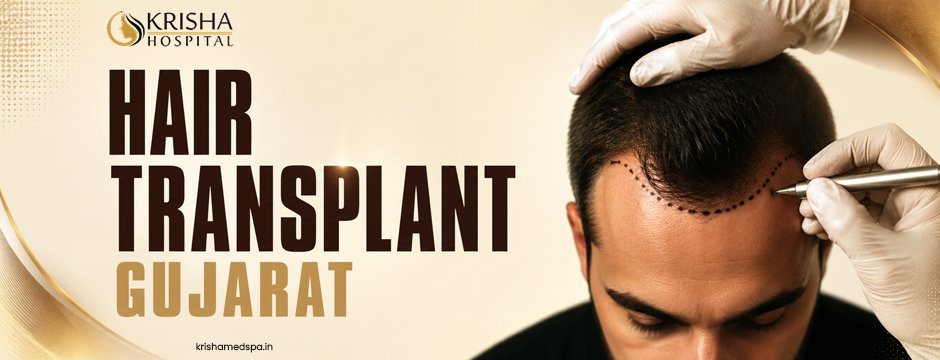
8 Things to Check Before Choosing a Hair Transplant Centre
Before choosing a hair transplant hospital Gujarat, residents should look beyond advertisements. A useful checklist includes:
- Whether a qualified doctor performs the consultation and procedure
- Whether the donor area is assessed before a treatment plan is proposed
- Whether the recommended technique is explained with reasons
- Whether risks, limitations, and expected recovery are discussed
- Whether the clinic explains graft numbers without exaggeration
- Whether aftercare and follow-up are clearly described
- Whether the quoted price explains what is included
- Whether patients are given enough time to make an informed decision
For people comparing hair transplant Gujarat options, these questions can make a clinic-to-clinic comparison much easier.
Why transparent treatment planning matters
Hair restoration is a long-term decision. A consultation should therefore go beyond discussing the procedure day.
Patients should understand how the proposed graft placement relates to their existing hair. They should also know whether future thinning could affect the overall appearance. This is particularly important for younger patients, whose pattern of hair loss may still be developing.
A sensible plan balances present concerns with future possibilities. It also avoids unnecessary graft use when the donor supply is limited.
Experienced Care for Hair Restoration
At Krisha Hospital, we combine personalised hair restoration planning with extensive surgical experience. Our team offers FUE, FUT, GFC, and PRP-based hair treatments based on each patient’s hair-loss pattern, donor area, and long-term goals. Led by Dr. Rajnikant Parmar, an M.Ch. Plastic Surgery Gold Medalist with 15+ years of experience, we focus on careful assessment and natural-looking outcomes.
Dr. Parmar has performed 10,000+ surgeries and treated more than 20,000 patients. As an IAPS member, we follow a patient-focused approach supported by clinical expertise and modern techniques to help patients make informed decisions about hair restoration.
Final takeaway
Choosing a hair restoration clinic is a medical decision, not just a cosmetic purchase. Patients should look for careful assessment, appropriate technique selection, realistic planning, transparent pricing, and structured aftercare.
Whether someone needs a transplant or may benefit from a non-surgical approach, the right plan should match the person’s hair-loss pattern, donor supply, expectations, and long-term goals.
A hair transplant hospital Gujarat also offers a consultation that can help turn general information into a medically appropriate treatment plan suited to the individual. In conclusion, patients seeking a hair transplant hospital Gujarat option should prioritise medical judgement, personalised planning, safety, and honest communication.
For a personalised consultation and to explore suitable hair restoration options, speak with the specialists at Krisha Hospital.
FAQs
- What is the main benefit of choosing a hair transplant centre in Gujarat?
A trusted centre provides personalised assessment, suitable treatment selection, realistic expectations, and structured aftercare. Patients can compare FUE, FUT, GFC, and PRP based on their hair-loss pattern and long-term goals. - Which hair restoration treatments are available?
Patients can explore FUE and FUT transplantation, along with non-surgical GFC and PRP treatments. The recommended option depends on hair-loss severity, donor supply, follicle health, and individual treatment goals. - How much do GFC and PRP treatments cost in Gujarat?
GFC typically costs ₹10,000–₹25,000 per session, while PRP generally ranges from ₹4,000–₹15,000. Final pricing depends on the patient’s condition, number of sessions, and treatment plan. - How can I choose a safe and trustworthy hair transplant centre?
Check the doctor’s qualifications, donor-area assessment, treatment explanation, risks, recovery guidance, pricing transparency, and follow-up process. Avoid centres that promise guaranteed density or identical results. - Why choose a specialist centre over other hair transplant options?
A specialist centre can compare multiple techniques rather than promoting one procedure. Personalised planning, experienced medical care, natural hairline design, and appropriate aftercare can help patients make more informed treatment decisions.