
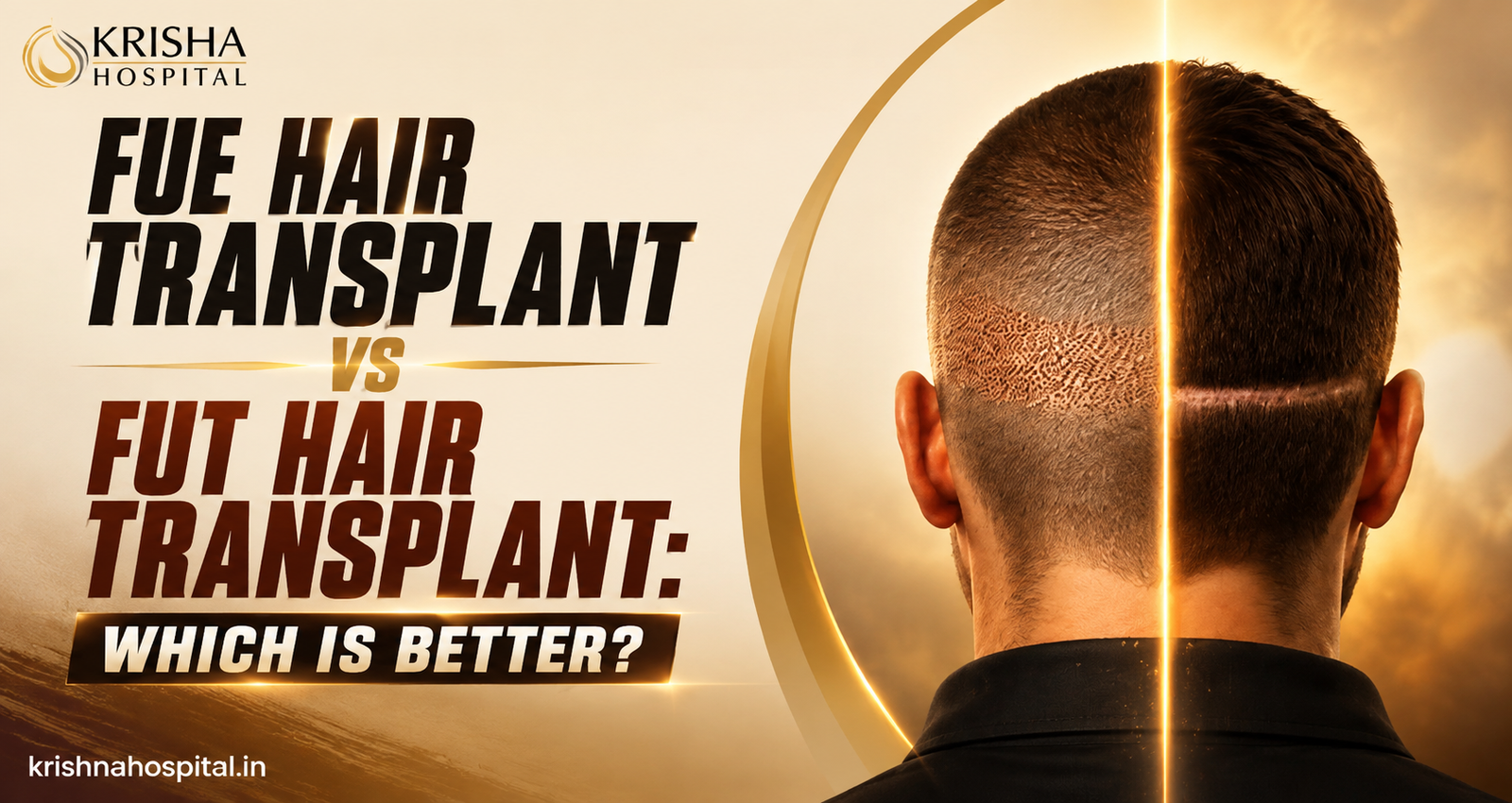
Choosing a hair restoration procedure can feel surprisingly complicated. You may want a fuller hairline, but you also need to think about donor hair, recovery, scarring, cost, and how much hair you may need in the future.
A FUE (Follicular Unit Extraction) hair transplant and FUT (Follicular Unit Transplantation) are both established techniques for moving healthy follicular units from a donor area to areas affected by hair loss. The biggest difference is how those grafts are harvested. In both methods, the surgeon carefully places the prepared grafts into recipient sites to create a natural-looking result.
So, which option is better? There is no universal winner. The right choice depends on your pattern of hair loss, donor supply, hairstyle, treatment goals, and the surgeon’s assessment.
FUE Hair Transplant: How Does It Work?
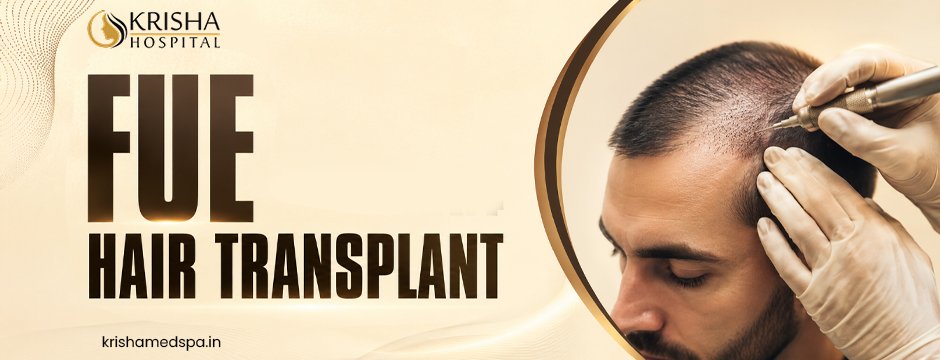
A FUE hair transplant removes individual follicular units from the donor area rather than taking a strip of scalp.
The process usually begins with a scalp and hair-loss assessment. Local anaesthesia is then used to keep the treatment area comfortable. Using a specialised punch, the surgeon extracts individual follicular units. These grafts are examined, sorted, and prepared before being placed into the recipient area.
Because each graft is harvested separately, there is no long linear incision in the donor region. Instead, tiny extraction sites heal individually.
Who May Benefit From FUE?
This approach can be useful for people who:
- Prefer to keep their hair relatively short.
- Want to avoid a linear donor scar.
- Have suitable donor density for individual extraction.
- Need a smaller or moderate restoration.
- Prefer a procedure involving individual graft harvesting.
However, suitability should never be decided from photographs alone. Hair characteristics, follicle direction, density, scalp condition, and future hair-loss risk all matter.
FUT Hair Transplant: What Happens During the Procedure?
A FUT hair transplant uses a strip-excision technique. After local anaesthesia, the surgeon removes a carefully selected strip of donor tissue, generally from the permanent donor zone.
The strip is then divided into individual follicular units using microscopic dissection. These grafts may contain one, two, three, or more hairs. Meanwhile, recipient sites are created according to the planned hairline and density.
The main strength of this method is efficient harvesting from a concentrated donor area. It can therefore be particularly useful when a patient requires a substantial number of grafts.
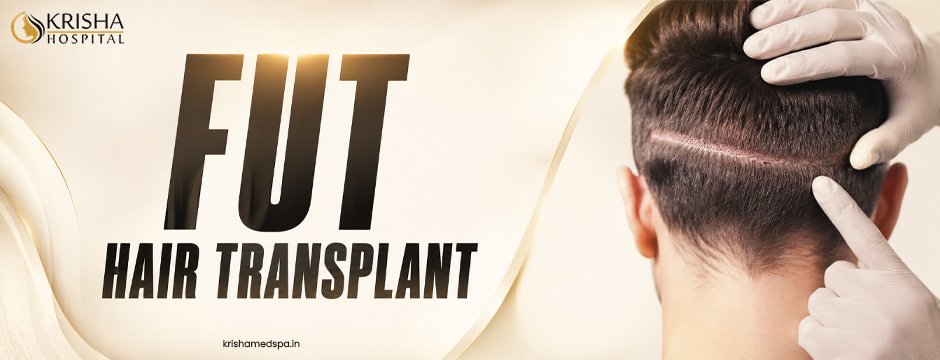
The trade-off is a linear scar in the donor area. The scar is generally concealed by surrounding hair, but it can become more noticeable with very short hairstyles.
FUE vs FUT: The Key Differences
The easiest way to understand the two methods is to focus on the donor area.
| Factor | FUE | FUT |
| Graft harvesting | Individual follicular units | Donor strip |
| Donor scar | Multiple tiny scars | One linear scar |
| Stitches | Generally not required | Required to close the incision |
| Short hairstyles | Often more suitable | May expose the linear scar |
| Large graft requirements | May require longer or multiple sessions | Can efficiently provide many grafts |
| Donor extraction | Spread across selected areas | Concentrated strip |
| Recovery | Often relatively quick | Usually involves more wound healing |
| Cost | Often higher | Often lower, depending on the case |
These are general comparisons, not guarantees. Surgical technique and patient factors can change the experience considerably.
Which Procedure Gives More Natural Results?
The answer may surprise you: the harvesting technique alone does not determine whether the finished transplant looks natural.
The recipient design is crucial. Hairline shape, graft angle, direction, spacing, density, and the distribution of single-hair grafts all influence the final appearance.
Furthermore, the quality of harvested grafts matters. Follicular units need to remain viable and protected during extraction, preparation, and implantation. Damage during harvesting can reduce the potential for successful growth.
Therefore, focusing only on whether a clinic offers FUE or FUT misses an important point. Surgical planning and graft handling are equally significant.
Scarring: What Should You Expect?
Scarring is one of the clearest differences between the techniques.
With FUE, individual extraction points heal as small marks. They can be difficult to notice when the procedure is performed well, and the donor area heals normally. However, extensive harvesting or repeated procedures can increase visible donor changes.
With FUT, the donor wound is closed, leaving a linear scar. Its appearance depends on factors such as surgical closure, healing characteristics, scar formation, and hairstyle.
If you regularly wear a very short haircut, discuss scarring openly during consultation. A hairstyle preference can influence which procedure makes more sense.
Donor Supply Is Often the Deciding Factor
Your donor area is not an unlimited reservoir of hair.
A good surgeon must consider how many usable grafts are available today and how much donor hair may be needed later. This becomes especially important when hair loss is progressive.
Individual extraction can offer flexibility, but indiscriminate harvesting can thin the donor area. Strip harvesting can efficiently access a selected region, but it creates a linear scar.
Consequently, the best strategy is not simply to maximise the number of grafts in one appointment. It is to use the available donor hair responsibly over the patient’s lifetime.
When Can Both Techniques Be Used?
Some patients may benefit from combining approaches across different treatment stages.
For example, a patient who initially needs a substantial number of grafts may undergo FUT and later use FUE for targeted refinement. Another patient may begin with FUE and eventually require a different harvesting strategy if additional restoration is needed.
This decision depends on donor density, scalp characteristics, previous procedures, scar condition, and the amount of remaining hair.
A combined approach can be valuable in complex restoration cases, but it should be planned carefully rather than used simply to increase graft numbers.
What About Large Hair Transplant Sessions?
Extensive baldness can require thousands of grafts. However, the number that can safely be harvested depends on the donor area’s density and long-term stability.
Some patients may need staged procedures. Others may be candidates for larger sessions involving different donor sources, such as scalp or beard hair. Body hair may sometimes be considered, but its characteristics can differ from scalp hair.
For this reason, a quoted graft number should never be viewed as a universal target. A personalised examination is essential before estimating what can realistically be achieved.
FUE vs FUT: Which Is Better for You?
Consider your priorities before choosing.
FUE may suit you better if:
- You strongly prefer a short hairstyle.
- Avoiding a linear scar is important.
- Your donor area is suitable for individual extraction.
- Your restoration can be achieved without excessive harvesting.
FUT may suit you better if:
- You require a relatively large number of grafts.
- Maximum efficient use of a selected donor zone is important.
- You are comfortable keeping enough hair length to conceal a linear scar.
- Cost is an important consideration.
Neither list replaces a medical evaluation. A skilled hair-restoration surgeon should assess your current loss, donor characteristics, hair calibre, expected future loss, and cosmetic goals before recommending a technique.
Questions to Ask Before Booking
A consultation should go beyond asking, “How many grafts will I get?”
Ask:
- How stable is my donor area?
- How many grafts can be safely harvested?
- What happens if my hair loss progresses?
- Where will the donor scar be located?
- How will my hairline be designed?
- What recovery period should I expect?
- Will I need another procedure later?
- Which technique does the surgeon recommend, and why?
These questions help you understand the long-term plan rather than focusing solely on the procedure day.
Trusted Hair Restoration Expertise at Krisha Hospital
With 15+ years of experience, Krisha Hospital combines advanced surgical expertise with personalized patient care. Dr. Rajnikant Parmar, an M.Ch Plastic Surgery Gold Medalist, has performed 10,000+ surgeries and treated 20,000+ patients. His international training and extensive experience support precise, patient-focused cosmetic and hair restoration procedures. With 8,456+ happy clients and 5,673+ surgeries performed, Krisha Hospital focuses on safe, natural-looking outcomes. Explore expert FUE and FUT hair transplant solutions designed around your individual needs.
Final Verdict: FUE or FUT?
There is no single procedure that is best for every patient. A FUE hair transplant can be attractive for people who prioritise minimal linear scarring and short hairstyles. FUT can be valuable when efficient harvesting and a larger graft requirement are central to the treatment plan.
Ultimately, the better procedure is the one that matches your donor supply, degree of hair loss, hairstyle, budget, and long-term restoration goals. A careful consultation should determine the strategy rather than a marketing label.
If you are considering hair restoration in Gujarat, Krisha Hospital can provide a personalised consultation to discuss your hair-loss pattern, donor area, suitable treatment approach, expected recovery, and realistic outcomes before you make a decision.
Frequently Asked Questions
1. Which is better, FUE or FUT hair transplant?
Neither technique is universally better. FUE may suit people who prefer short hairstyles and minimal linear scarring, while FUT can be useful when a larger number of grafts is required.
2. Is FUE more expensive than FUT?
Generally, FUE can cost more because grafts are extracted individually and the procedure may take longer. The final price depends on graft requirements, donor availability, surgeon expertise, and treatment complexity.
3. Which hair transplant has less scarring?
FUE typically leaves small extraction marks rather than one linear scar. FUT leaves a linear donor scar that may be visible with very short hairstyles. Individual healing and surgical technique also affect scar appearance.
4. How long does it take to recover from FUE or FUT?
FUE generally involves quicker donor-area healing, while FUT requires additional healing because a strip is removed and the incision is closed. Recovery varies according to the procedure, patient, and surgical technique.
5. Can FUE and FUT be combined?
Yes. Selected patients may benefit from using both techniques across different treatment stages. The decision depends on donor density, previous procedures, scalp characteristics, hair-loss progression, and the number of grafts required.
6. How much does a hair transplant cost?
Hair transplant pricing varies based on graft numbers, technique, donor quality, treatment complexity, and clinic expertise. A personalised consultation is necessary to provide a realistic treatment plan and cost estimate.
7. How do I choose between FUE and FUT?
Consider your hair-loss pattern, donor supply, preferred hairstyle, budget, scar preference, and long-term restoration goals. A qualified hair-restoration surgeon should evaluate these factors before recommending the most appropriate technique.